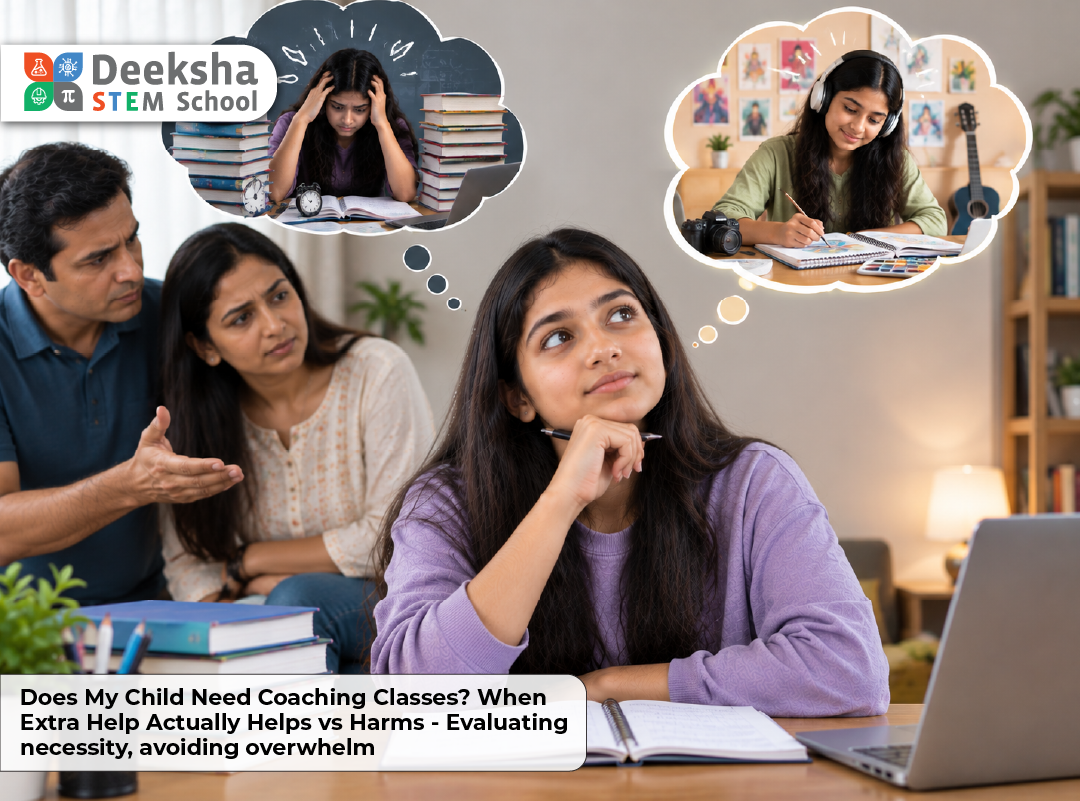
“But I studied for two hours” isn’t usually a lie, and treating it like one misses what’s actually happening. A child can spend two genuine, undistracted hours with a textbook open and still walk into an exam with far less retained than either of them expected. The gap isn’t effort. It’s a mismatch between what feels like learning and what actually is.
Active vs Passive Study Methods: The Real Difference Isn’t Effort
Active vs passive study methods get confused constantly, because both can look identical from the outside, a child sitting quietly with a book. Passive study means information passing in front of a student: rereading a chapter, highlighting a paragraph, watching a solved example again. Active study means the student generates the information themselves: trying to explain a concept from memory, solving a problem without looking at the worked example first, testing recall with the notes closed. Both take real time and real effort. Only one of them builds the kind of memory that survives an exam.
Why Studying Doesn’t Work: The Illusion of Competence Explained
Why studying doesn’t work, despite honest effort, comes down to a well-documented gap between how learning feels and how it actually works, sometimes called the illusion of competence. Research on this repeatedly finds the same pattern: rereading material makes it feel familiar, and that fluency, the ease with which words seem to make sense on a second or third pass, gets mistaken for actual mastery. The material feels known because it’s easy to follow, not because it could actually be reproduced without it in front of you.
There’s a useful distinction researchers draw here, between storage strength and retrieval strength. Something can genuinely be stored in memory, technically “known” in some sense, while retrieval strength, the ability to actually pull that information out on demand, under exam conditions, without any cues, stays weak. A child rereading notes the night before an exam can build real storage strength while barely touching retrieval strength at all, which explains the paradox exactly: they aren’t imagining the studying. They’re measuring the wrong thing as evidence that it worked.
Effective Study Techniques for Exams: Building Retrieval Strength on Purpose
Effective study techniques for exams work specifically because they force retrieval strength to develop, rather than just storage. Closing the book and writing down everything recallable about a topic, then checking against the notes, builds exactly the skill a closed-book exam demands, since it recreates that exact condition during practice. Attempting a problem before looking at the worked solution, rather than reading the solution first and nodding along, does the same thing for procedural topics like math or physics. The core principle underneath all of it: study conditions should resemble test conditions as closely as possible, since practicing recognition (reading and following along) prepares a student for a very different task than the one an exam actually demands.
How to Study Properly: A System That Doesn’t Rely on Trusting the Feeling
How to study properly, in practice, means building a system that doesn’t depend on trusting how confident a topic feels while the notes are still open. A workable version: read a section once, properly, then close it entirely and write down everything remembered, in your own words, without peeking. Compare that against the actual notes afterward, and treat every gap found this way as the real, current syllabus, not a discouraging failure. Repeat specifically on whatever was missed, rather than starting the whole topic over from scratch. The only confidence worth trusting is the kind that follows a successful blind recall, not the kind that shows up while reading feels smooth and familiar.
Teaching Real Study Techniques: What Parents Can Actually Do
Teaching real study techniques at home doesn’t require becoming a tutor. A more useful question than “did you study” is “can you teach me this with the book closed,” which turns a vague self-report into an actual, visible test of retrieval strength in real time. It’s also worth simply noticing whether a child’s studying involves the book staying open the entire session, a fairly reliable sign that the method leans passive, regardless of how many hours were logged. And it’s worth resisting the instinct to equate hours spent with learning achieved. Twenty focused minutes of genuine retrieval practice regularly outperforms two hours of comfortable rereading, which is a hard thing for both a parent and a tired child to believe in the moment, but it’s exactly what the research on this keeps finding.
How This Fits a Deeksha STEM Classroom
This is close to the exact mechanism enquiry-based learning is designed around: asking a question and expecting a genuine attempt at an answer, rather than simply presenting information to be absorbed, is retrieval practice built directly into how a lesson runs, not an extra step added afterward. Experiential science and learning by design push this further, since applying a concept hands-on, building something, running an actual experiment, makes it far harder to fake fluency the way rereading a page can. And communicative English earns a direct, practical role here too: asking a student to explain a concept out loud is, quite literally, the same closed-book retrieval test described above, just delivered as conversation instead of a written check.
The Bigger Picture
A child who studies for hours and still struggles isn’t being dishonest, and they usually aren’t being lazy either. They’re trusting a feeling, familiarity while the page is open, that was never a reliable signal of real learning to begin with. The fix isn’t more hours. It’s closing the book sooner, and finding out, honestly and a little uncomfortably, what’s actually still missing.
FAQs
My child insists they studied for hours, so why did they still fail? Most likely because the studying was passive, rereading or reviewing notes, which builds a feeling of familiarity without building the retrieval strength an exam actually demands. The hours were real. The method just wasn’t testing what the exam tests.
Is highlighting or rereading ever useful at all? It has some value early on, for a first pass through unfamiliar material, but it should be treated as a first step, not the main study method. The real learning tends to happen in the retrieval step that comes after.
How can I tell if my child is studying actively or passively? Ask them to explain the topic with their notes closed. If they can do it clearly and specifically, that’s active learning working. If they can only follow along while looking at the page, the studying so far has likely been passive.
What’s the fastest way to switch from passive to active studying? After reading any section once, close it immediately and try to recall everything from memory before checking. That single habit shift, done consistently, tends to make the biggest difference of anything mentioned here.